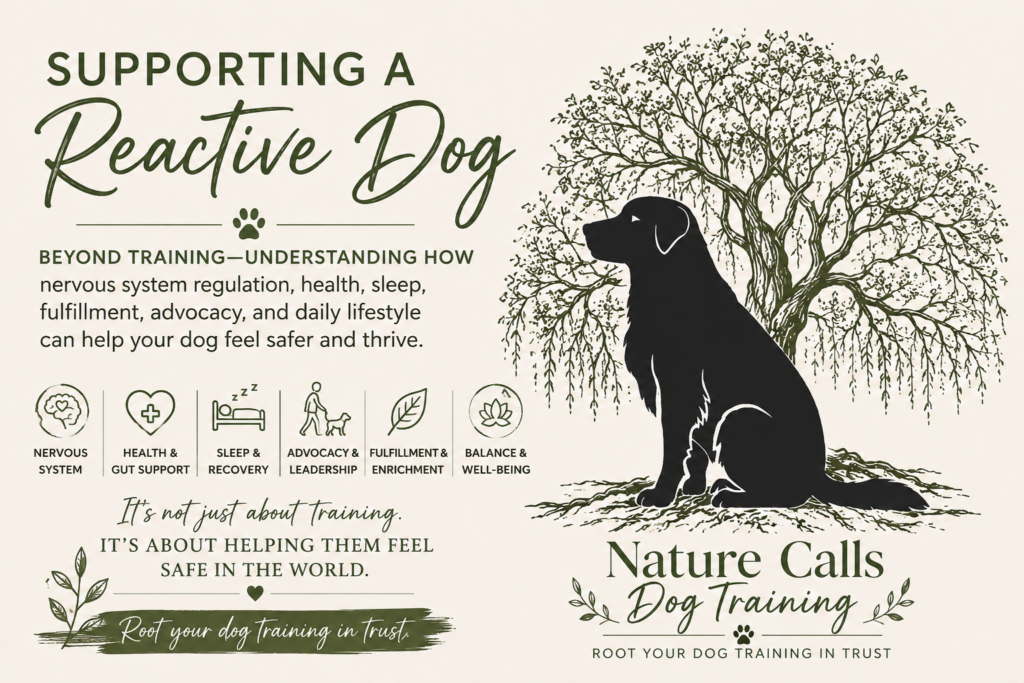
Supporting the Reactive Dog-Beyond Training
Understanding the Nervous System, Health & Daily Lifestyle–Supporting the Reactive Dog
Reactivity is not simply a “bad dog” or a dog being stubborn.
Many reactive dogs are overwhelmed, overstimulated, stressed, fearful, frustrated, or struggling to regulate their nervous system.
Training matters — but so do:
- sleep
- health
- fulfillment
- handler energy
- environment
- recovery
- advocacy
- routine and structure
When we support the whole dog, we often see better emotional balance, clearer thinking, and improved recovery from stressful situations.
Reactivity Is Often an Emotional Response
Reactive behaviours can include:
- barking
- lunging
- growling
- spinning
- whining
- hyper-fixation
- shutting down
- inability to disengage
These behaviours are often symptoms of an overwhelmed nervous system rather than simple disobedience.
A dog that is over threshold cannot learn effectively.
The goal is not simply to “stop the reaction” — the goal is to help the dog feel safer, more regulated, and capable of making better choices.
The Nervous System Matters
Dogs living in a constant state of stress or hyper-vigilance may struggle to:
- settle
- sleep deeply
- recover from stimulation
- process information clearly
- regulate emotions
Stress hormones can build over time.
This means repeated stressful experiences without proper recovery can “tip the scale” toward more reactive behaviour.
Recovery matters just as much as exposure.
Sometimes progress comes not from doing MORE — but from learning when to slow down.
Your Energy Affects Your Dog
Dogs are incredibly observant of human body language and energy.
Fast breathing, nervous talking, tension on the leash, or frantic movements can accidentally increase a dog’s concern.
Instead, focus on:
- calm breathing
- tall, confident posture
- slower movements
- clear direction
- calm follow-through
- less talking
Many owners instinctively say:
“It’s okay, it’s okay, shhh…”
But anxious reassurance can sometimes communicate that there is something to worry about.
Instead of panic or excessive talking:
- breathe
- advocate
- create space
- move with purpose
- calmly guide your dog through the situation
Calm leadership creates clarity.
Advocacy Builds Trust
Reactive dogs often need their humans to step in and help them feel safe.
Advocating for your dog may include:
- stepping between your dog and a trigger
- not allowing strangers to rush up
- avoiding forced greetings
- leaving situations before your dog explodes
- respecting your dog’s communication
- creating distance when needed
Advocating is not avoidance or weakness.
It is helping your dog feel supported while teaching better coping skills.
Fulfillment Changes Behaviour
A fulfilled dog is often easier to regulate emotionally.
Dogs were bred for different purposes and many need appropriate outlets for:
- movement
- sniffing
- problem solving
- play
- working
- decompression
- chewing
- exploration
Important reminder:
An exhausted dog is not always a fulfilled dog.
Mental balance matters just as much as physical exercise.
Structured play, sniff walks, training games, decompression time, and calm routine can all help support emotional regulation.
Sleep & Recovery Are Essential
Many reactive dogs are overtired and overstimulated.
Constant stimulation, busy schedules, chaotic environments, excessive socialization, dog parks, or lack of downtime can make regulation harder.
Dogs need:
- deep rest
- decompression
- predictable downtime
- opportunities to truly relax
Some dogs need more recovery time than others — and that’s okay.
Health & Gut Health Matter Too
Physical discomfort and health can impact behaviour more than many people realize.
Things that may influence behaviour include:
- digestive upset
- food sensitivities
- chronic discomfort or pain
- inflammation
- poor sleep
- nutritional imbalance
Research continues to explore the gut-brain connection and how digestion may affect mood and stress regulation.
Simple supportive options some owners discuss with their veterinarian may include:
- plain Greek yogurt
- probiotics
- improved diet quality
- hydration support
- nervous system support supplements
Always speak with your veterinarian before adding supplements or making major dietary changes.
Small Changes Can Create Big Shifts when Supporting the Reactive Dog
Progress often comes from many small lifestyle adjustments working together.
Examples:
- calmer exits through doors
- advocating earlier
- reducing chaotic greetings
- structured decompression walks
- better sleep routine
- calmer leash handling
- less verbal pressure
- shorter successful outings
- more recovery between stressful events
- creating predictable structure
Small consistent changes often create the biggest long-term impact.
Supplements Are Supports — Not Solutions
Supplements may help support the nervous system, but they do not replace:
- training
- leadership
- advocacy
- relationship building
- structure
- fulfillment
- recovery
Every dog is different.
What helps one dog may not help another.
The goal is not to suppress the dog — but to help them feel safer, more balanced, and better able to navigate the world around them.
Final Thoughts-Supporting the Reactive Dog
Reactive dogs are not “bad dogs.”
Many are simply struggling to process the world around them.
With patience, structure, advocacy, fulfillment, and nervous system support, many dogs can learn to feel safer, calmer, and more capable over time.
Progress is rarely linear — but small consistent steps matter.
Feeling overwhelmed or unsure where to start?
You don’t have to figure it out alone.
If your dog is struggling with reactivity, anxiety, or overwhelm, I’m here to help guide you through it—step by step, at your dog’s pace.
Reach out to learn more or book your Meet & Greet today
Nature Calls Dog Training
Nature-Inspired, Dog-Informed Training
Root your dog training in trust

Be the first to comment